Your cart is currently empty!
Tag: FastAPI
-
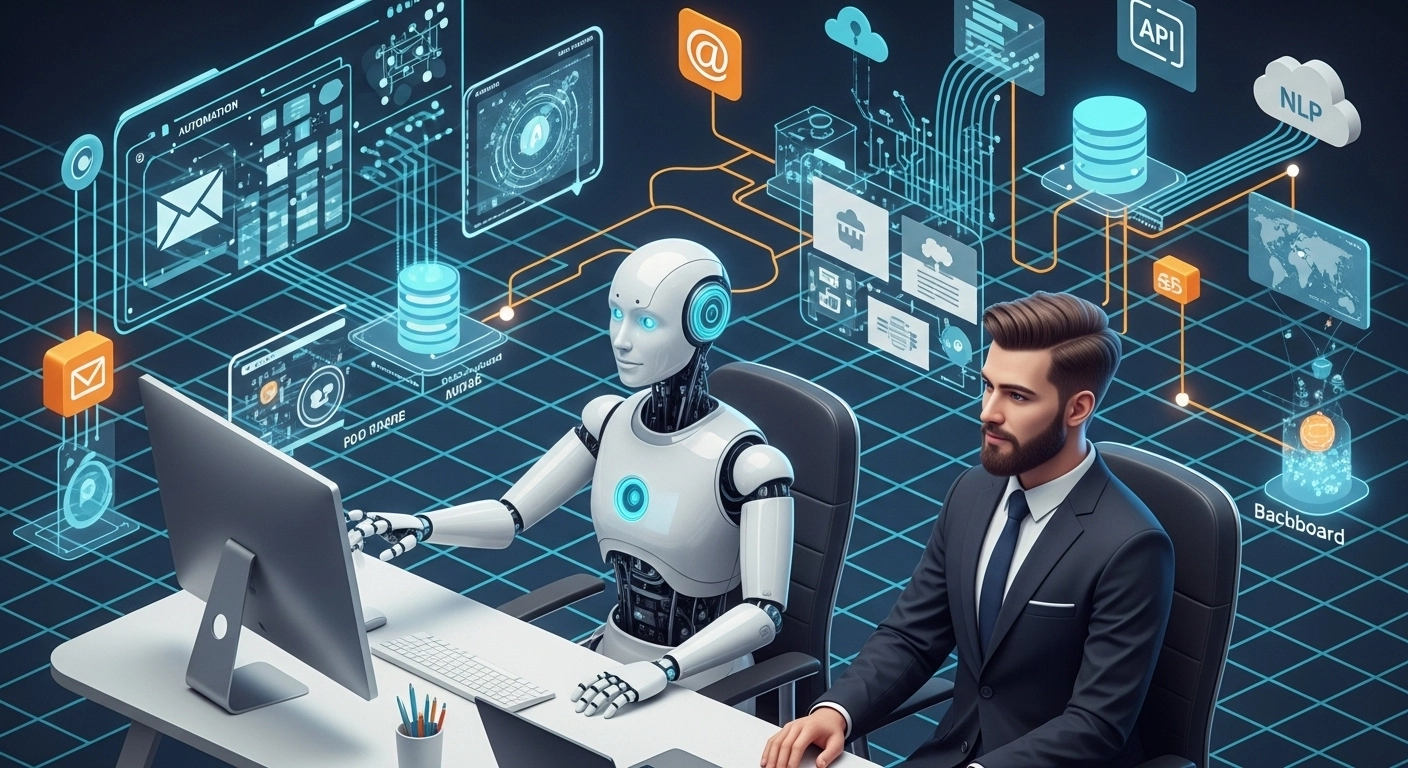
How Intelligent Bots Streamline Workflows
Businesses often struggle with repetitive tasks that consume valuable time and human resources. Intelligent bots are transforming operations by automating processes, reducing manual effort, and ensuring consistent performance.
These bots, powered by technologies like Python, FastAPI, and NLP libraries, can handle tasks such as reading emails, processing forms, updating CRMs, and even interacting with APIs. For example, a customer support bot can analyze incoming messages, categorize them, and assign them to the appropriate team member—instantly.
One of the most impactful uses is in data entry automation. A well-configured bot can pull data from multiple sources (websites, emails, PDFs), process and clean it, and input it into a database. Event-based orchestration allows bots to trigger actions only when specific events occur, reducing resource consumption.
To build such bots, developers typically use workflows combining cron jobs, webhooks, and services like Zapier or AWS Lambda. FastAPI serves as a reliable backend framework to build REST APIs that bots can consume. Adding natural language processing lets bots interpret user queries more effectively.
In short, bots are the workforce of the digital age—working 24/7, error-free, and at scale. Integrating them into your business improves speed, reduces errors, and allows teams to focus on strategic tasks.
-

Boost Efficiency with AI Automation
In today’s fast-paced business environment, companies seek smarter ways to improve productivity and reduce manual effort. AI automation, powered by tools like TensorFlow, SageMaker, and Python, is transforming how businesses operate.
Imagine an AI model that automatically reads and categorizes documents, or a chatbot that answers customer queries around the clock. These are no longer futuristic concepts but everyday applications of AI automation.
Document automation uses OCR and NLP to scan, extract, and structure data from invoices, contracts, and reports. Tools like FastAPI let you deploy such systems with minimal overhead. Predictive analytics, meanwhile, helps businesses anticipate demand, reduce churn, and optimize inventory by analyzing historical data.
One real-world example is a logistics company using AI to predict delivery delays by analyzing weather, traffic, and driver behavior. By acting early, they improved customer satisfaction and saved costs.
To succeed with AI automation, start small. Identify repetitive tasks, choose the right model, and test your solution before scaling. Also, make sure your team understands both the business problem and the tech stack.
AI isn’t about replacing jobs—it’s about enhancing human capabilities. With smart planning, your business can unlock powerful efficiencies and gain a competitive edge.